Loading...
Serving East Moline, IL and surrounding areas. (309) 865-0097
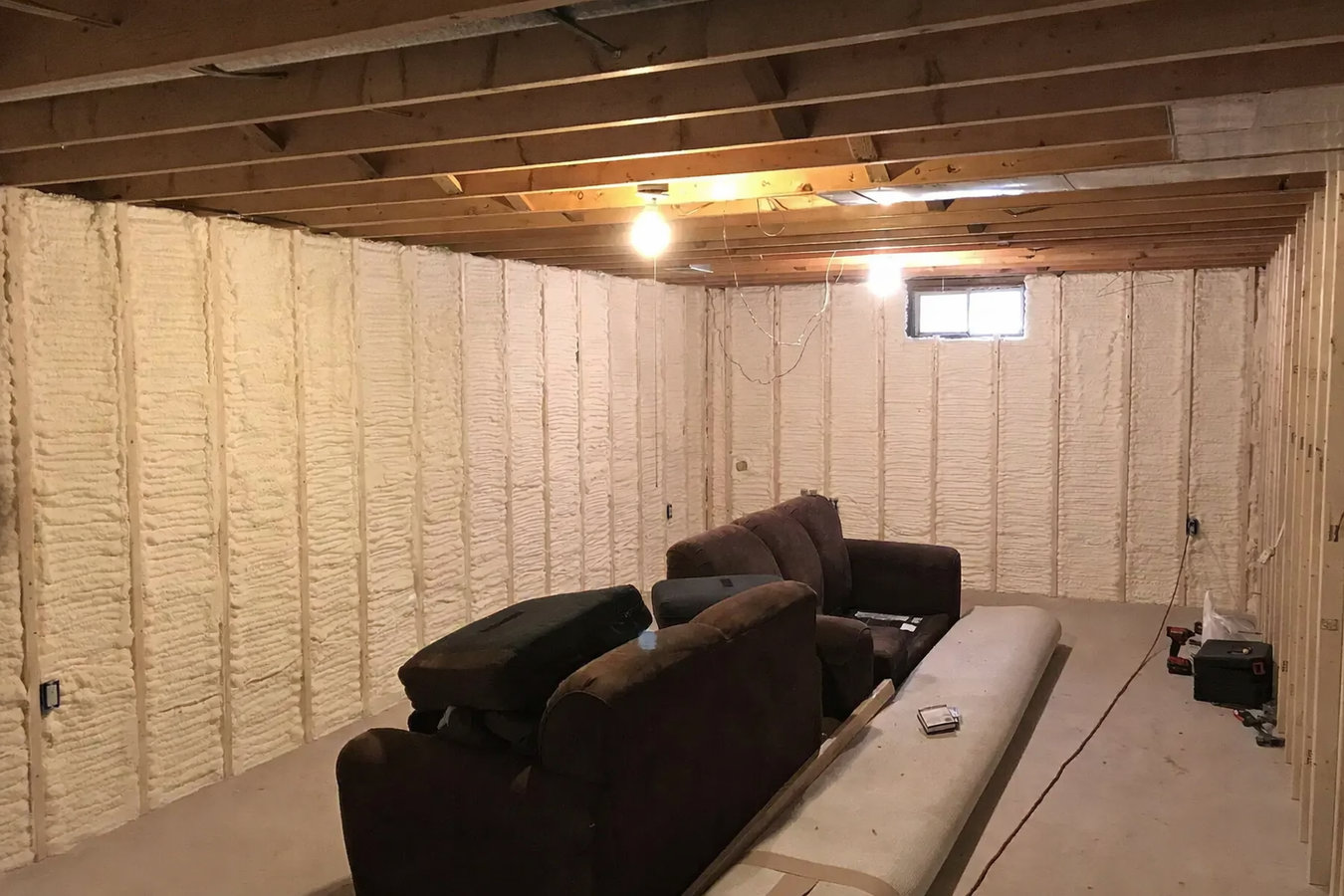
An uninsulated basement is one of the biggest sources of heat loss in a cold-climate home. We check for moisture first, then install the right solution so your basement stops costing you money.
Basement insulation in East Moline creates a thermal barrier between your living space and the cold air below, most jobs take one to two days, and the result is warmer floors on the first level and a furnace that does not have to run as long or as hard to keep your home comfortable.
If your kitchen or living room floor feels cold in January no matter how high you set the thermostat, your basement is likely where that heat is escaping. Cold air collects below grade, and without insulation it moves right through your foundation walls and the wooden framing at the top of your foundation - known as the rim joist - into your living space. For homes in East Moline, many of which were built before modern insulation standards existed, this is one of the most common and most fixable energy problems.
Basement insulation works best when it is paired with attention to moisture - and in East Moline, that step cannot be skipped. We check for signs of seepage or condensation before any material goes in. If you are also considering the crawl space below a connected addition or utility room, our crawl space insulation service covers that area with the same moisture-first approach.
If your gas or electric bill jumps sharply from October through March and your furnace runs almost without stopping, your basement is likely one of the biggest culprits. In East Moline's climate, an uninsulated basement can account for a significant share of the heat your home loses on a cold day. Every degree that escapes through bare concrete walls is heat your furnace has to replace.
Cold floors above an uninsulated basement are one of the most common complaints from homeowners in older Quad Cities homes. If you walk across your kitchen or living room in socks during winter and the floor feels noticeably cold with the heat running, heat is escaping through your basement ceiling and the foundation walls below it. This is rarely a thermostat problem - it is an insulation problem.
Condensation, white chalky deposits on concrete, or a persistent damp smell in your basement are signs that your basement environment needs attention before or alongside insulation. This is especially common in East Moline neighborhoods near the river, where the water table is higher. Insulating over a damp wall traps moisture and can lead to mold - a contractor who checks first is showing you they know what they are doing.
If you see insulation hanging from basement walls or joists that looks yellowed, compressed, or falling apart, it is no longer doing its job. Insulation damaged by moisture, pests, or simple age loses its ability to hold heat. In some cases, damaged insulation can also become a health concern if mold has taken hold. Old material needs to come out before anything new goes in.
The right basement insulation approach depends on whether your space is finished or unfinished, whether you use it as living area, and what the moisture conditions look like. For most unfinished basements in East Moline, the rim joist - the wood framing that sits at the top of your foundation wall where the house meets the foundation - is the first and most important place to address. Spray foam applied to that area seals air leaks and insulates in a single step. For the main foundation walls, we use spray foam or rigid foam board depending on what gives you the best performance for the space.
If you are planning to finish your basement and turn it into living space, insulating the walls is the foundation of that project - not an afterthought. We can coordinate that work with any framing or finishing plan you have in mind. Homeowners who have already had moisture problems may also benefit from our closed-cell foam insulation, which adds a vapor-resistant barrier at the same time it insulates. And if you are dealing with insulation that has outlived its usefulness or been damaged by moisture or pests, our team handles removal before any new material goes in.
Best for homeowners who want the fastest payoff - sealing and insulating the wood framing where most basement heat loss occurs.
Best for unfinished basements where bare concrete walls are the main source of cold and heat loss through the winter.
Best for walls and rim joists where air sealing and insulation need to happen together, especially in older homes with uneven framing.
Best for homeowners planning to convert basement space into a livable room and needing a complete thermal and comfort solution.
East Moline sits in the Quad Cities region where winter temperatures regularly drop into the single digits and wind chill can push conditions well below zero. That kind of cold puts serious pressure on an under-insulated basement - your furnace runs constantly trying to compensate, and you feel it in your heating bill every January and February. A large share of the homes here were built between the 1920s and 1960s, and many of those basements were never insulated at all, or were insulated decades ago with materials that have long since degraded. If your home is more than 40 years old, there is a good chance your basement is losing heat through bare concrete walls and an unprotected rim joist every day from November through March.
East Moline's location along the Mississippi River also means the water table in many neighborhoods sits relatively close to the surface, and basement moisture is a common complaint in this area. Insulating over a damp wall is one of the most common basement insulation mistakes - it traps moisture inside and leads to mold where you cannot see it. We serve homeowners throughout the Quad Cities, including customers in Silvis and Carbon Cliff, where the same older housing stock and river-influenced climate conditions create the same basement challenges.
We ask a few basic questions - basement size, whether it is finished or unfinished, and whether you have noticed any moisture issues. You will hear back within one business day to schedule an in-home visit, and the estimate is always free.
We walk through your basement and look at the walls, ceiling, and rim joist area where your foundation meets the framing. We check for moisture, existing insulation, and anything that needs to be addressed before new material goes in - and we flag water problems rather than cover them up.
You receive a written estimate that breaks down what work will be done, what materials will be used, and the total cost. We also let you know whether your project qualifies for Ameren Illinois or MidAmerican Energy rebates before you sign anything.
The crew installs the insulation according to the plan - one to two days for most homes. When the work is done, we walk you through the finished job, clean up the work area, and confirm any permit inspection if one was pulled for the project.
Free estimate. Moisture check included. No pressure, no commitment.
(309) 865-0097Basement insulation installed over an active moisture problem is a future mold problem. We inspect for water intrusion and condensation before recommending any approach. If we find something that needs to be addressed first, we tell you - that is what a trustworthy contractor does.
We have been working on basements and insulation projects in East Moline and the surrounding Quad Cities communities since 2016. We know the housing stock here - older brick and frame homes with unique challenges - and we do not have to learn on the job at your house.
When a permit is required for your basement project, we pull it and schedule the inspection. That means an independent city inspector verifies the work before the job is officially closed out - documentation that protects you if you ever sell the home. A contractor who skips permits is also skipping that accountability.
Ameren Illinois and MidAmerican Energy both offer rebates for qualifying insulation upgrades in the Quad Cities area. We help you understand what your project qualifies for before you sign anything, so you are not paying more out of pocket than you have to. The federal energy efficiency tax credit is another layer of savings worth knowing about.
We bring the same work ethic to every basement job that East Moline homeowners expect from anyone who works on their home. You get an honest assessment, a clear written estimate, and a crew that cleans up when they leave. The U.S. Department of Energy identifies basement insulation as one of the highest-impact energy improvements a homeowner in a cold climate can make - and we have seen that play out in East Moline homes for years.
Rigid, moisture-resistant closed-cell spray foam for basement walls and rim joists where performance and vapor control both matter.
Learn MoreInsulate and condition the crawl space below your home to stop cold floors and moisture from working their way up.
Learn MoreEast Moline winters do not wait - lock in your installation date before the fall rush and start saving on heating costs this season.