Loading...
Serving East Moline, IL and surrounding areas. (309) 865-0097
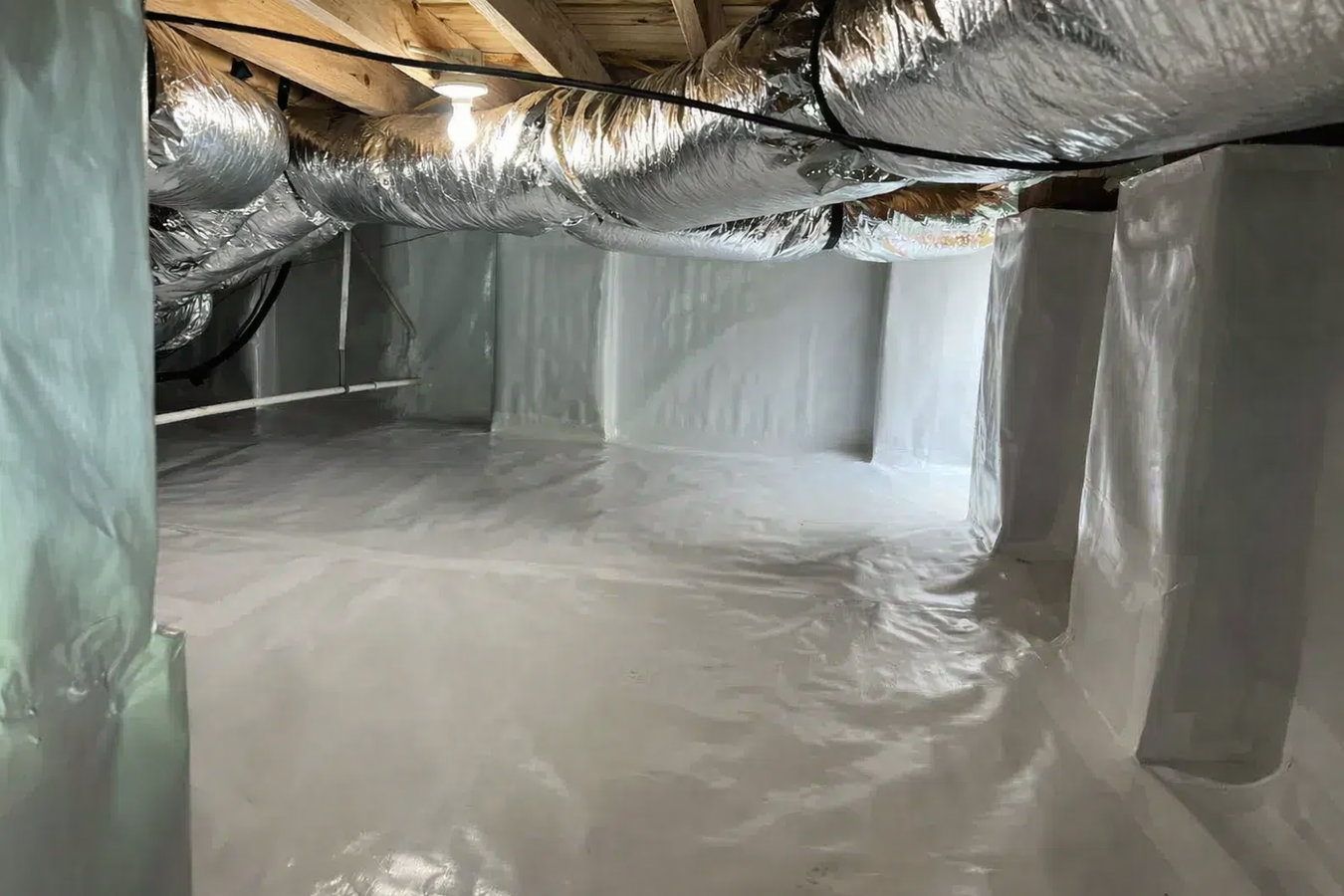
Bare dirt under your home releases moisture year-round. We install durable vapor barriers that block ground moisture before it reaches your floors, framing, and indoor air.
Crawl space vapor barrier installation in East Moline means laying a heavy-duty plastic sheet across the bare dirt floor of your crawl space to stop ground moisture from rising into your home - most jobs take one day, and results include reduced musty odors, drier air indoors, and better protection for the wood framing that holds your floors up.
Without a vapor barrier, your crawl space acts like an open sponge sitting under your living room. Ground moisture evaporates up through the soil, finds its way into your floor joists and insulation, and then moves into the air inside your home. In East Moline, where clay-heavy soil and proximity to the Mississippi River keep ground moisture levels elevated, this process happens year-round - not just after heavy rain. The result is musty smells, elevated indoor humidity, and over time, wood that absorbs enough moisture to begin softening.
A vapor barrier addresses that problem directly by cutting off the moisture pathway at ground level. Homeowners who also have inadequate insulation in the crawl space often combine this work with our crawl space insulation service to solve both problems at the same time.
A damp, earthy odor in your home - especially after heavy rain or during the spring thaw - is almost always coming from your crawl space. In East Moline, the combination of clay soil and fast snowmelt means this smell tends to peak between February and April. It is your home telling you that moisture is moving up from the ground unchecked. The longer you wait, the more it works its way into the structure above.
Walk slowly across your first floor and notice any spots that feel softer than they should, or where the floor has a slight bounce to it. This can mean the wood floor joists directly above your crawl space have absorbed enough moisture over time to begin weakening. In older East Moline homes, many built between the 1920s and 1960s, this kind of moisture damage is more common than most homeowners expect.
If anyone has looked into your crawl space recently and noticed dark spots, fuzzy growth, or wood that looks stained or discolored, that is direct evidence of sustained moisture. Healthy wood in a crawl space should look dry and light-colored. Dark or soft wood means the moisture problem has already been active long enough to cause damage - and that damage will continue to worsen without intervention.
If your home feels stuffy and damp during summer even with the AC running, or if a pest inspector has flagged moisture-related risk near your foundation, your crawl space is likely contributing to both problems. Termites and carpenter ants are drawn to damp wood, and excess indoor humidity in summer is a direct result of unprotected crawl space moisture moving up into your living space.
We install heavy-duty polyethylene sheeting - typically 10-mil or thicker - across the entire crawl space floor, running the material up the foundation walls and securing every seam with tape so moisture cannot sneak through joints or edges. Thinner plastic tears easily and lets moisture through at punctures and overlaps, which is why material quality matters. A complete installation means no exposed dirt is visible anywhere when the job is done. For homeowners considering a full crawl space encapsulation that also addresses walls and vents, we discuss that scope during the estimate so you understand all your options.
If your crawl space has existing insulation that has been damaged by moisture - hanging, compressed, or moldy batts are common in older East Moline homes - we remove that material before the barrier goes in so you are not sealing in a problem. Homeowners who want to add insulation after the barrier can combine this service with our vapor barrier installation service, which covers the full range of moisture protection options for different areas of the home. If you are also considering adding spray foam or batt insulation to the crawl space floor joists, our team can scope both phases of work at the same visit.
Best for homeowners with a bare dirt crawl space who want reliable moisture protection at a straightforward price point.
Best for crawl spaces where moisture is coming from multiple directions, including foundation wall seepage and ground evaporation.
Best for older homes where years of accumulated debris, old plastic, or fallen insulation need to come out before the new barrier goes in.
Best for homeowners who want to address both moisture and heat loss in the crawl space in a single coordinated project.
East Moline sits along the Mississippi River in a region where winters push well below freezing and spring thaws happen fast. When the ground thaws, it releases a large amount of moisture all at once - and in a crawl space with no vapor barrier, that moisture has nowhere to go but up into your home. The clay-heavy soil that runs through Rock Island County compounds the problem by holding water close to the surface for extended periods after rain and snowmelt, rather than draining quickly. This combination of seasonal freeze-thaw stress and persistent ground moisture means East Moline crawl spaces face more sustained moisture pressure than homes in drier or faster-draining areas. A large share of the city was built before vapor barriers were standard practice, so many homes have bare dirt floors that have been releasing moisture for decades.
We work on homes across the Quad Cities, including older neighborhoods in Rock Island and Moline, where the same river-influenced conditions and mid-century housing stock create identical crawl space challenges. If you are not sure whether your home has a vapor barrier or what condition the existing one is in, a free inspection is the fastest way to find out. The U.S. Environmental Protection Agency notes that a significant portion of indoor air comes up from below the home, which means what happens in your crawl space directly affects the air your family breathes every day.
We ask a few basic questions about your home - crawl space size, any smells or moisture you have noticed, and whether the space has been inspected before. You will hear back within one business day to schedule a free on-site visit.
A technician accesses the crawl space and checks the current condition - bare dirt, existing plastic, standing water, mold, or insulation issues. This visit takes 30 to 60 minutes, and you get a clear picture of what the crew found before they leave.
You receive a written quote that breaks down exactly what will be done and what it costs. If there are issues beyond the barrier itself - like debris removal or mold - those are listed separately so you know what you are paying for.
The crew clears debris, installs the barrier with properly overlapped and taped seams, and runs the material up the foundation walls. Most jobs finish in one day. Before leaving, the contractor walks you through the completed work so you can see the finished installation yourself.
Free written estimate. No pressure. We explain exactly what we find before any work begins.
(309) 865-0097Crawl space moisture problems vary widely from home to home, and a fair price requires actually seeing the space. We inspect before we quote - which means no surprises when the crew shows up. It also means we catch existing mold or standing water that would cause problems if sealed over.
Not all vapor barriers are equal. We use thick, durable sheeting - the kind that holds up to occasional foot traffic during future maintenance visits and does not tear at seams or punctures over time. Thin plastic is a common corner that cheaper contractors cut, and it costs homeowners more in the long run.
We have been working on homes in East Moline and the surrounding Quad Cities since 2016, which means we understand the local clay soil conditions, the older housing stock, and the seasonal moisture patterns that make crawl space work here different from drier parts of the country. That local knowledge shows up in how we plan and price each job.
Our work follows the standards set by the Insulation Contractors Association of America - the national trade body that defines best practices for crawl space moisture protection. You can review those standards directly at the ICAA website.
Every crawl space job we take on starts with an honest look at what is actually happening under your home. We tell you what we find, explain your options clearly, and do the work right the first time - because a vapor barrier that fails at the seams or leaves bare dirt exposed is not a vapor barrier.
Full vapor barrier installation service covering crawl spaces, basement floors, and other moisture-prone areas throughout your home.
Learn MorePair your vapor barrier with crawl space insulation to stop both moisture and heat loss from below your home at the same time.
Learn MoreEast Moline springs are the hardest season on unprotected crawl spaces. Call today to get a free estimate scheduled before the ground thaws.