Loading...
Serving East Moline, IL and surrounding areas. (309) 865-0097
Your attic may be losing heat right now. Blown-in insulation fills every gap batts miss and keeps your home comfortable through every Illinois winter.
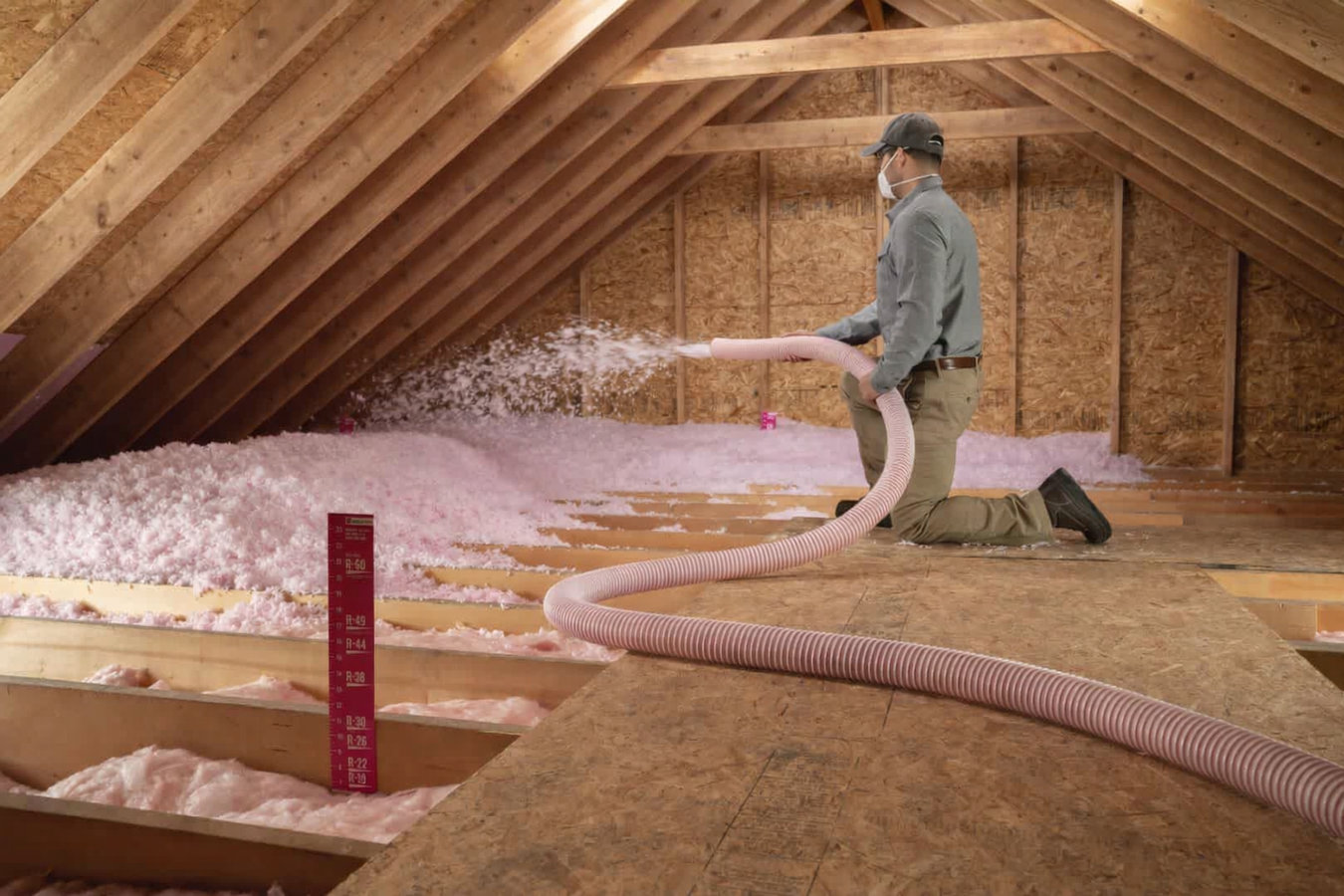
Blown-in insulation in East Moline, IL is loose-fill fiberglass or cellulose material a contractor blows into your attic or wall cavities using a hose from a truck, filling gaps and corners that rigid batts cannot reach - and most attic jobs are completed in a single day.
East Moline homes - especially those built before the 1980s - are often under-insulated by today's standards for Climate Zone 5. If your heating bills spike every November and certain rooms never warm up, there is a good chance your attic or walls are the reason. Blown-in insulation is one of the most cost-effective ways to fix that without major renovation work.
If you have also been dealing with drafts around outlets or windows, pairing blown-in insulation with whole-home insulation work delivers even stronger results by addressing both heat loss and air infiltration together.
If your furnace runs constantly during East Moline's cold months but certain rooms never quite warm up, heat is escaping through an under-insulated attic or walls. That tradeoff between a high gas bill and a comfortable home usually points to an insulation problem, not a furnace problem. Addressing it now prevents another expensive heating season.
Take a flashlight into your attic. If you can see the wooden joists poking up above the insulation, you do not have enough. In older East Moline homes you might find compressed fiberglass batts or a thin layer of loose material that has settled over the decades - neither is doing the job it once did.
Ice dams are ridges of ice that build up along the edge of your roof after a snowfall. They happen when heat escapes through a poorly insulated attic, melts snow on the upper roof, and that water refreezes at the cold eaves. East Moline winters are long enough that ice dams are a real risk - and they can push water under your shingles.
Hold your hand near an electrical outlet on an outside wall on a cold day. If you feel cool air, there are gaps behind that wall connecting to the outside. This is a common finding in pre-1980s East Moline homes and signals that both air sealing and blown-in insulation could make a real difference in your comfort and energy costs.
We install blown-in insulation in attics, wall cavities, and hard-to-reach spaces throughout East Moline and the Quad Cities. For attics, we blow loose-fill fiberglass or cellulose across the entire floor to the correct depth for your climate zone, covering gaps that rigid batts leave behind. For homes with hollow exterior wall cavities - common in East Moline houses built before 1970 - we drill small access holes, blow in the material, and patch everything cleanly. Every job starts with a measurement of what is already there so you get exactly what your home needs, not a round number pulled from thin air.
Many homeowners combine attic blown-in work with wall insulation to tackle heat loss on multiple fronts at once. For attic-specific needs, pairing blown-in insulation with home insulation services helps address the whole house in a single visit and often qualifies for larger utility rebates.
Best for homeowners whose attic insulation is thin, compressed, or simply too old - loose-fill material fills the entire floor evenly and reaches every corner.
Ideal for older East Moline homes with hollow exterior wall cavities that let cold air circulate inside the structure.
Holds its depth consistently over time and resists moisture, making it a durable choice for attics in this climate.
Made from recycled paper treated to resist fire and pests - a solid choice when budget matters or when covering irregular surfaces.
East Moline sits in Climate Zone 5, where average January lows regularly drop well below freezing and the cold stretches from November into March. A large share of the city's housing stock was built between the 1920s and 1960s - homes that were never designed to meet today's insulation standards and that have had decades for whatever insulation was installed to compress and settle. Blown-in insulation is well-suited to these older homes because the loose material flows into every corner, around old framing and wiring, and fills voids that rigid batts simply cannot reach.
East Moline's location along the Mississippi River also means higher humidity than inland communities - especially in spring and early summer. We check for moisture in your attic before installing anything, because adding insulation on top of a moisture problem makes it worse. Homeowners in Carbon Cliff and Silvis face the same conditions and have the same older housing stock, so we handle those projects the same careful way.
We will ask a few quick questions about your home - age, the areas you want insulated, and any comfort or billing problems you have noticed. We reply within one business day. There is no obligation until you approve a written quote.
A technician visits to measure your attic, check what is already there, and look for moisture or ventilation issues before insulation goes in. This visit typically takes 30 to 60 minutes and results in a written, itemized quote.
The crew parks outside, runs a hose from the truck through your home to the attic hatch, and blows the insulation material evenly across the floor. Most attic jobs finish in a few hours. You can stay home - the work is loud but contained.
We verify depth with markers left in the attic, clean up any escaped material, and hand you paperwork showing the insulation type, depth, and R-value achieved - everything you need to claim your federal tax credit and Ameren Illinois rebate.
No pressure, no obligation. We measure what your home actually needs and give you a written quote before any work starts. Most homeowners get a response within one business day.
(309) 865-0097Every job starts with a free on-site assessment and a written estimate that spells out the scope, materials, and price. You know exactly what you are paying for before we start, and you have recourse if the work does not meet the agreed standard.
We leave measurement markers in the attic so you can check the depth yourself after we are gone. You paid for a specific R-value - you should be able to confirm you got it. That is a step many contractors skip.
East Moline's location near the Mississippi River means attic moisture is a real issue. We inspect for moisture and ventilation problems before installing anything, because covering a moisture problem with insulation makes it worse. We will tell you honestly if something needs to be addressed first.
Between the federal tax credit (up to 30% of project cost) and Ameren Illinois rebates, real money is available. We provide the product documentation you need to claim both - without it, those benefits disappear. Check current Ameren offers at Ameren Illinois.
We work on East Moline homes every day - from the older brick foursquares near downtown to the ranch-styles on the north side. We know the housing stock, the climate, and the local permit requirements. That local knowledge is what makes the difference between insulation that is installed and insulation that actually performs.
Comprehensive insulation for every part of your home - attic, walls, crawl space, and basement - handled in a single coordinated project.
Learn MoreBlown-in wall insulation through small drilled holes fills hollow exterior wall cavities in older East Moline homes without major renovation.
Learn MoreEast Moline winters do not wait - call now or submit a request online and we will be in touch within one business day.