
Loading...
Serving East Moline, IL and surrounding areas. (309) 865-0097
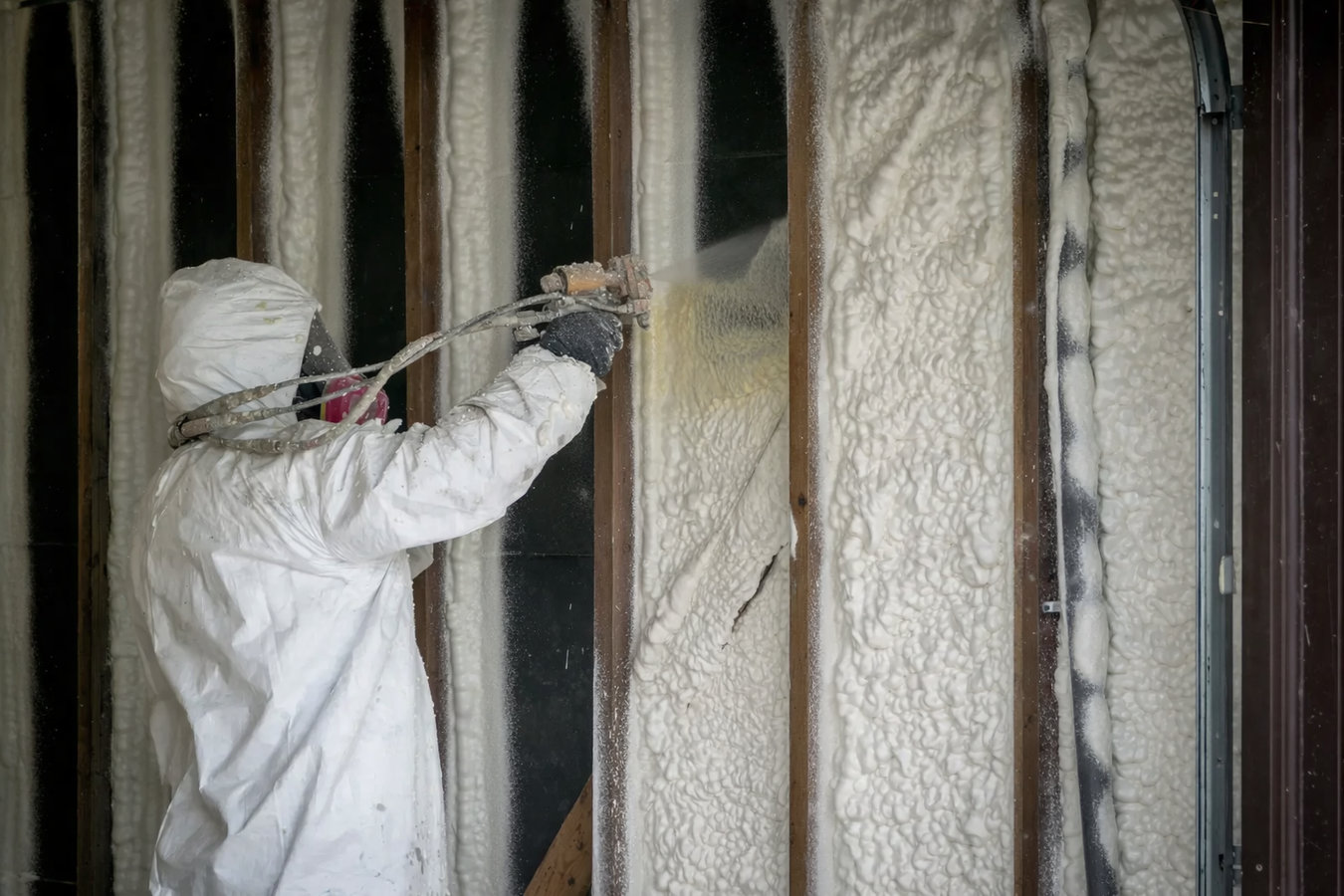
East Moline Insulation delivers spray foam, attic insulation, and blown-in insulation to Eldridge, Iowa homeowners - serving Scott County families in both the city's established neighborhoods and its newer subdivisions, with free written estimates and no travel fees since 2016.
Eldridge homes built in the 1980s and 1990s almost universally have unsealed rim joists - the band of framing that sits between the foundation wall and the first-floor subfloor. That gap is the single largest source of cold air infiltration in most of these homes. Spray foam insulation seals rim joists completely, stops the cold air that makes ground-floor rooms uncomfortable in January, and adds an insulating layer that no batt product can match in those tight spaces.
Iowa energy standards call for R-49 in attics, but most Eldridge homes built before 2010 fall well short of that target. Bringing the attic up to depth keeps heat inside during Scott County's hard winters, reduces furnace run time, and prevents the ice dams that form when a warm attic melts snow that then refreezes at the eaves.
Blown-in fiberglass or cellulose is the most practical upgrade for Eldridge ranch homes and two-stories because it fills around existing framing and wiring without tearing out drywall. For homes that already have some attic insulation but not enough, blown-in adds the extra depth quickly and at a lower cost than tear-out and replacement.
Eldridge homes from the 1980s and 1990s were built before air sealing became a standard part of residential construction. Gaps around recessed lights, plumbing penetrations, and attic hatches let heated air bypass the insulation entirely. Sealing these gaps before adding blown-in or batt insulation ensures the upgrade actually delivers the performance you are paying for.
Scott County soil retains moisture and stays cold year-round, keeping uninsulated Eldridge basement walls damp and driving cold into the floor above. Insulating foundation walls raises the comfort of the main living floor and reduces the moisture drive that causes mold and wood rot in unfinished lower levels.
Some Eldridge homes - particularly split-levels and older ranch homes with partial basements - have crawl space areas that are uninsulated and open to outdoor air. Cold Iowa winters make these spaces the fastest path for cold air to reach the living floor. Insulating and encapsulating the crawl space eliminates cold floors and the moisture that follows unconditioned ground-level air.
Eldridge is a growing Scott County community where the bulk of the housing stock was built between 1970 and 2005. Ranch homes, split-levels, and two-story colonials from that era were constructed to the energy codes of the time - codes that allowed far less insulation than what Iowa now recommends for efficient homes. The National Weather Service Quad Cities office records average January temperatures in the low 20s, with lows routinely dropping below zero during cold snaps. At those temperatures, homes with under-insulated attics or unsealed rim joists bleed heat through every gap, and furnaces run longer and harder than they should.
Newer subdivisions on the edges of Eldridge, built in the 1990s and early 2000s, are now 20 to 30 years old - the point where original insulation has settled and where homeowners often notice for the first time that their energy bills are climbing. Scott County soil is predominantly clay-based, which holds water and stays cold against foundation walls well into spring. Homes that have never had basement walls or rim joists insulated deal with moisture issues and cold floors that no amount of furnace thermostat adjustment will fix. Addressing the thermal envelope directly is the only reliable solution.
Our crew works throughout Eldridge regularly, and we understand the local conditions that affect insulation work here. The city's housing is spread across a mix of established streets near the original town center and newer subdivision blocks that were cornfields 25 years ago. The homes close to the core tend to be ranch-style with low attic profiles and original fiberglass batts; the newer streets feature taller two-stories where blown-in upgrades are straightforward but rim joist sealing is often overlooked. We see both types often enough to spot the common gaps before we even pull out the measuring tape.
Eldridge sits along U.S. Route 61 in Scott County, east of Davenport and north of Bettendorf. The North Scott Community School District is a big reason families put down roots here and stay long-term, which means homeowners tend to invest in their properties rather than defer maintenance. The Scott County building department handles permit coordination for projects that require it, and we are familiar with their process.
Eldridge is close to several communities we serve on a regular basis. Homeowners in East Moline across the river call us for the same types of projects, and we stay familiar with conditions on both sides of the Quad Cities metro.
Contact us by phone or through our online form. We respond within one business day and schedule your free on-site assessment at a time that works for you.
A crew member visits your Eldridge home, checks the attic, rim joists, basement, and crawl spaces, and gives you a written estimate on the spot. There is no charge for the visit, and no pressure to decide immediately.
We arrive on time with all materials and equipment. Most Eldridge attic and rim joist projects wrap up in a single day. You can stay home throughout - we work in attics and basements without disrupting your living space.
When the work is done, we clean up, walk you through what was installed, and answer any questions. You should notice the difference in comfort and draft reduction right away, especially heading into a Scott County winter.
We serve Eldridge and all of Scott County. Free written estimates, same-week scheduling, and no travel fees.
(309) 865-0097Eldridge is a city of about 7,500 residents in Scott County, Iowa, sitting east of Davenport along U.S. Route 61. It is part of the Quad Cities metropolitan area, and many residents commute into Davenport or Bettendorf for work while raising families in Eldridge for its quieter pace and the North Scott Community School District. The city has grown steadily over recent decades as families moved east from the larger urban core, and that growth brought a wave of suburban subdivision development alongside the city's older established streets near downtown.
The housing in Eldridge is predominantly single-family and owner-occupied, with most homes built between 1970 and 2005 in ranch, split-level, and two-story styles. Newer streets on the north and west sides of the city feature larger lots and homes that are now hitting the 15-to-25-year mark - the age when insulation, roofing, and exterior finishes start to need attention. Homeowners in Eldridge tend to invest in their properties, which fits with a community built around long-term family residency rather than turnover. Nearby Bettendorf to the west is another community we serve, with similar housing stock from the same postwar and late-20th-century eras.
Creates an airtight seal that dramatically cuts heating and cooling costs.
Learn MoreFills every gap and cavity for consistent, whole-home thermal coverage.
Learn MoreHigh-density foam that adds structural strength along with superior R-value.
Learn MoreLightweight expanding foam ideal for interior walls and sound control.
Learn MoreCommercial-grade insulation solutions that meet building codes and cut overhead.
Learn MoreBlocks ground moisture before it damages your home from underneath.
Learn MoreProfessional vapor barrier installation for lasting moisture protection.
Learn MoreUpgrades insulation in existing walls and spaces without major renovation.
Learn MoreCall us today or request a free estimate online. We schedule quickly across Scott County and there are no travel fees for Eldridge jobs.