Loading...
Serving East Moline, IL and surrounding areas. (309) 865-0097
Older commercial buildings in the Quad Cities lose significant heat and cooling through aging insulation. We assess your building, handle the permit, and install the right solution with minimal disruption to your operations.
Commercial insulation in East Moline slows heat transfer through your building walls, ceiling, and roof - most targeted upgrades take one to two days, and the reduction in heating and cooling costs is typically felt within the first full billing cycle after installation.
In East Moline, a significant share of commercial buildings were constructed before the 1980s - before modern energy codes set meaningful standards for insulation. Whatever insulation those buildings had originally has likely settled, compressed, or absorbed moisture over decades of use. The result is a building that looks fine from the outside but loses heat all winter and bleeds cool air all summer, pushing your utility bills higher with every passing season.
The right starting point is always an on-site assessment, not a phone estimate. We look at your specific building before recommending anything. Business owners dealing with moisture intrusion alongside insulation performance issues may also want to consider our spray foam insulation options, which seal air leaks and add insulation value in a single application.
If your heating or cooling costs have gone up noticeably over the past year or two - and you have not added equipment or expanded your space - failing insulation is one of the most common causes. In East Moline, where both heating and cooling seasons are long and demanding, even a moderate drop in insulation performance can translate to hundreds of dollars in extra utility costs each month.
When one part of your building feels drafty in January or stuffy in July no matter what the thermostat says, the insulation in that zone is not doing its job. This is especially common in older East Moline commercial buildings where insulation was installed unevenly or has settled over decades of use. Uncomfortable work areas affect productivity and drive up equipment wear as HVAC systems try to compensate.
Moisture damage is a red flag that insulation may have been compromised - especially in buildings near the Mississippi River or in low-lying parts of the city where humidity and occasional flooding are real concerns. Wet insulation loses most of its ability to slow heat transfer and can become a source of mold if left unaddressed. Visible staining is a sign that a professional assessment is overdue.
If your commercial space was built before the mid-1980s and insulation has never been updated, there is a strong chance it no longer meets current performance standards - and may have degraded significantly. East Moline has a substantial inventory of older commercial and light industrial buildings where this is exactly the situation, particularly along the Avenue of the Cities corridor and near the riverfront.
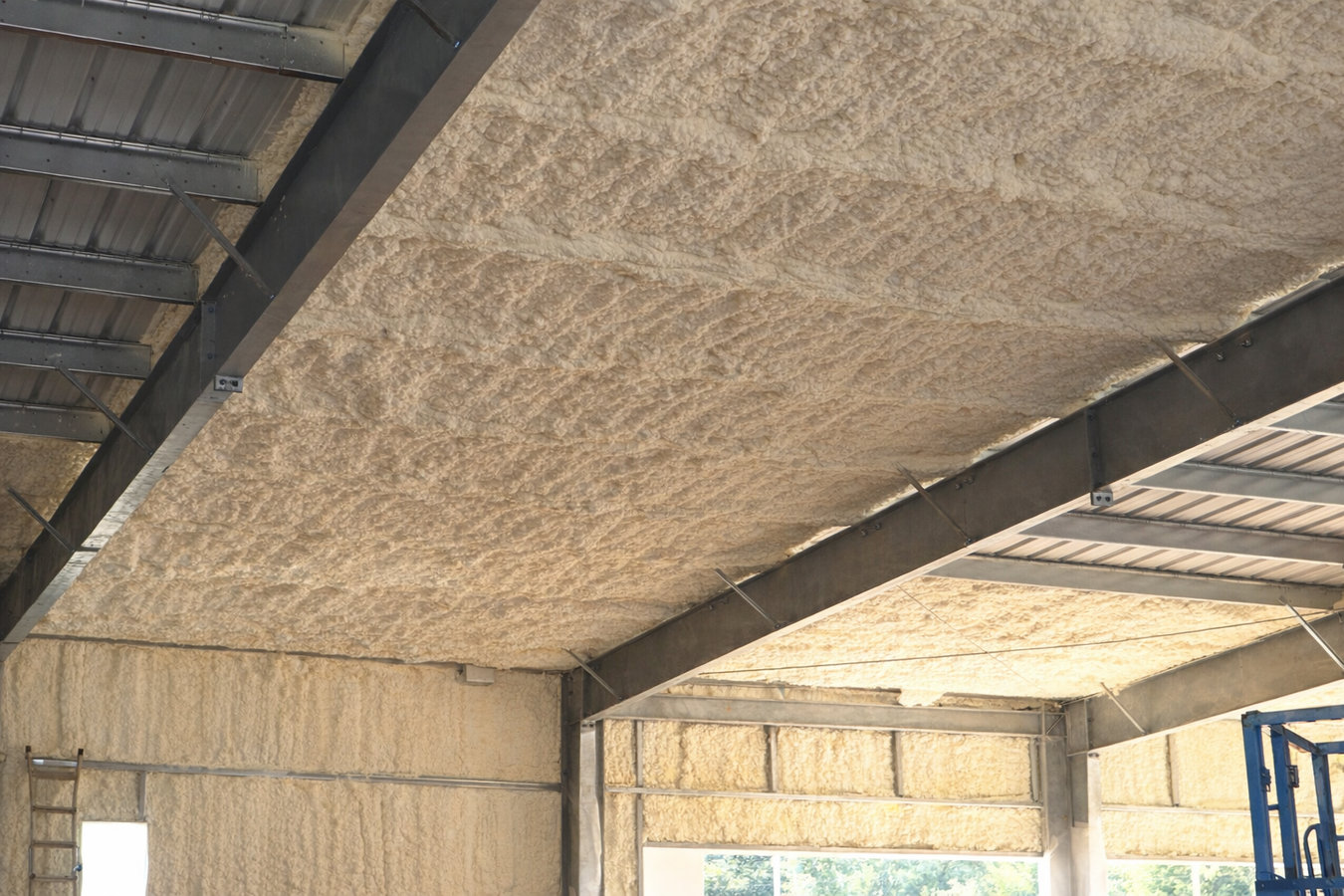
Commercial buildings have more varied insulation needs than single-family homes - different zones of the same building often call for different products and approaches. For ceiling and roof deck applications, spray foam is frequently the strongest choice because it seals air gaps and adds insulation value in a single pass. For large open attic spaces in retail or light industrial buildings, blown-in insulation can cover a lot of area quickly at a lower material cost. For flat surfaces like metal wall panels or exterior sheathing, rigid foam board cut to fit is often the right answer. Our crawl space vapor barrier service extends to commercial buildings as well - particularly for riverside properties and older structures where moisture intrusion is an ongoing concern.
We do not apply one product to every job. The assessment drives the recommendation. For any commercial project, we also handle permit coordination with the City of East Moline Building and Zoning Department and provide the documentation your contractor needs for Ameren Illinois rebate applications. Most commercial insulation work is contained to specific zones so the rest of your building can stay operational.
Best for buildings where air sealing and insulation need to happen together - roof decks, metal wall assemblies, and mechanical rooms.
Best for large open ceiling spaces in retail, office, or light industrial buildings where coverage area is high and access is straightforward.
Best for flat, accessible surfaces like exterior sheathing or interior wall furring where a precision-cut panel performs better than spray or loose fill.
Best for older buildings where existing insulation has been damaged by moisture, pests, or decades of use and needs to come out before anything new goes in.
East Moline sits in the Quad Cities metro where winter temperatures regularly drop below zero and summer heat indexes push past 100 degrees Fahrenheit. That extreme seasonal swing means commercial insulation here has to perform in both directions - keeping heat in during brutal winters and blocking it out during humid summers. Buildings constructed before the 1980s, which make up a large share of East Moline commercial stock along the Avenue of the Cities corridor and near the river, were often built with little or no wall insulation. Whatever was installed has likely settled, compressed, or absorbed moisture over the years. Business owners in these buildings are paying a premium on their utility bills every single season because of insulation that is decades past its effective life. The U.S. Department of Energy publishes guidance on commercial building energy efficiency at energy.gov that gives useful context on expected savings ranges.
East Moline proximity to the Mississippi River also creates moisture challenges that affect insulation performance and material selection. Buildings in low-lying areas near the river experience higher ambient humidity and, in some cases, occasional moisture intrusion. Standard insulation materials can absorb moisture over time, which causes them to compress and lose effectiveness - or worse, grow mold. We assess moisture conditions before recommending any material for river-corridor buildings. Our commercial customers include businesses in Davenport and Moline, where similar older commercial building stock and river-influenced humidity present the same challenges.
We ask a few basic questions about your building - type of construction, what is prompting the call, and whether there are specific problem areas you already know about. This 10 to 15-minute conversation helps us arrive at the site assessment prepared rather than starting from scratch. You will hear back within one business day to schedule a visit.
We walk your building - checking the attic or ceiling space, looking at wall construction, and identifying any obvious gaps or problem areas including moisture. This visit is free and usually takes an hour or less for most commercial spaces. A written estimate follows with a clear breakdown of what work is recommended and why.
For most commercial insulation work in East Moline, a building permit is required before work begins. We handle the permit application - you just sign off on it. Permit processing typically adds a few business days to the timeline, so we factor that in when scheduling around your operations.
The crew works in the zones being insulated while the rest of your building stays operational where possible. Before leaving, we walk you through the completed work and provide the documentation you need for any Ameren Illinois rebate application. No surprises on the invoice, and no areas left unfinished.
Free on-site estimate, written quote, permit handled for you. We reply within one business day.
(309) 865-0097East Moline commercial stock skews older - pre-1980s construction dominates the main corridors. We have worked in these buildings and understand their construction quirks: uneven framing, original brick cavity walls, and attic spaces that were never designed with modern insulation in mind.
East Moline requires permits for most commercial insulation work, and a contractor who skips that step creates a liability for you at resale or lease renewal. We manage the permit application, coordinate the inspection, and keep the paperwork organized so you are covered.
Ameren Illinois offers commercial energy efficiency rebates that can meaningfully offset project costs, but collecting them requires documentation filed correctly during the job - not reconstructed afterward. We identify what your project qualifies for before work starts and handle the submission. Information on current commercial programs is available at Ameren Illinois Business Energy Efficiency.
You cannot shut your doors for a week. We plan commercial insulation work in phases or off-hours when needed so your customers and employees experience as little disruption as possible. We tell you exactly what to expect before we show up - not after.
East Moline Insulation is a local contractor working in the same community as our commercial customers. We treat every building the way we would want our own to be treated - honest assessment, right product for the application, and no shortcuts on materials or documentation.
Moisture control under commercial and residential buildings along the river corridor, where humidity and seasonal water intrusion are ongoing concerns.
Learn MoreSpray foam applied to commercial walls, roof decks, and mechanical rooms where air sealing and insulation need to happen in a single pass.
Learn MoreEast Moline winters do not wait - book your on-site assessment now before the cold season fills the schedule.