
Loading...
Serving East Moline, IL and surrounding areas. (309) 865-0097
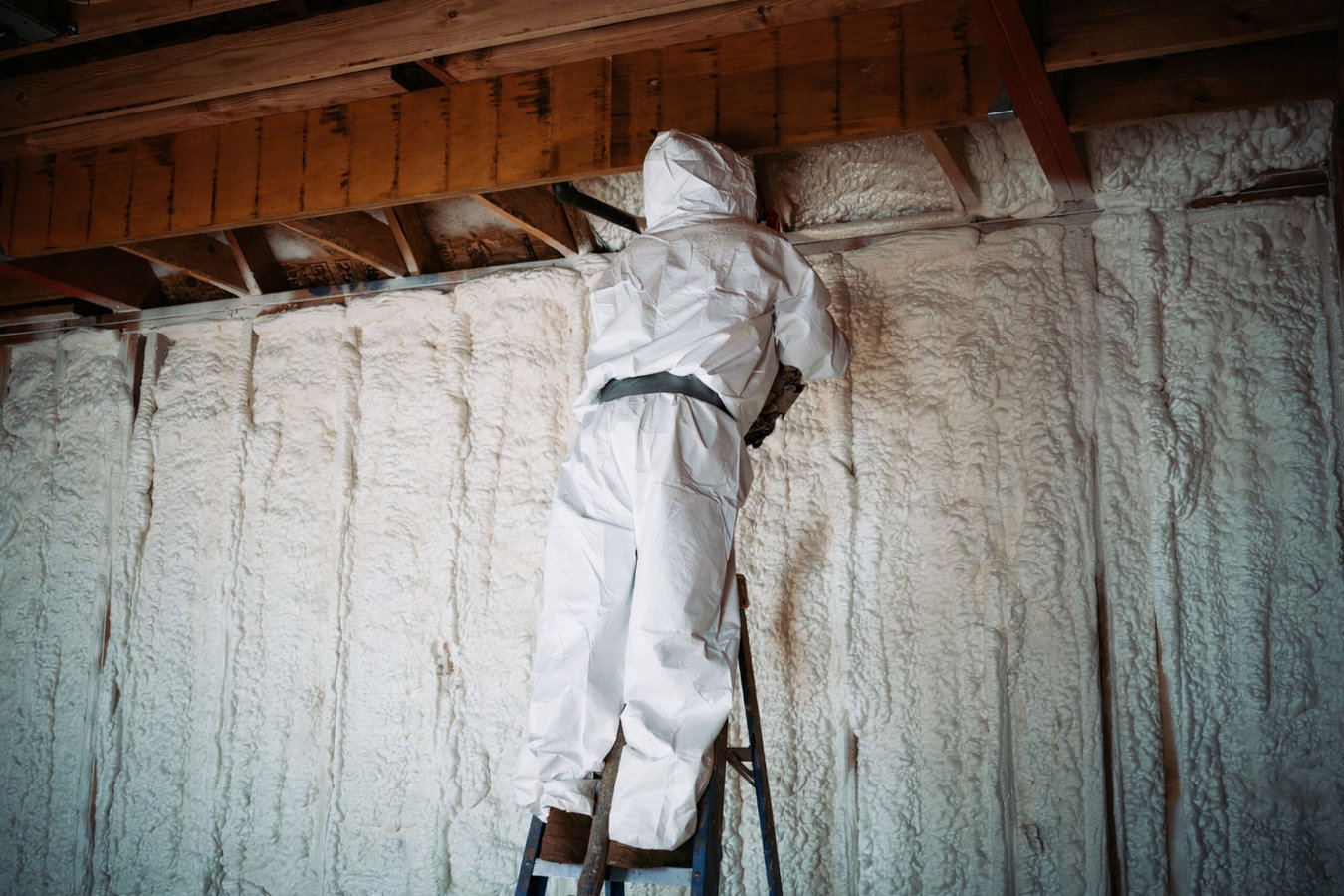
Closed-cell spray foam insulates, seals air leaks, and blocks moisture in one application - making it the highest-performing option for crawl spaces, rim joists, and basements in a cold, humid climate.
Closed-cell foam insulation in East Moline starts as a liquid, expands into a rigid dense foam on contact, and hardens into a surface that insulates, seals air leaks, and resists moisture movement all at once - most residential jobs finish in a single day and the improvement is measurable from the first heating season.
Unlike fiberglass batts or blown-in insulation, closed-cell foam fills every gap it touches as it expands. It does not sag, compress, or shift over time. For East Moline homes - many of which have crawl spaces and rim joists that were never properly insulated or sealed - that combination of performance and durability makes it the first choice for areas where moisture and cold air are both problems at once.
If you are comparing closed-cell to other foam options, our spray foam insulation page walks through how the two types differ and which applications each one suits best.
If your gas or electric bills seem higher than they should be for a home your size, and your HVAC equipment is in reasonable shape, the problem is often insulation and air leakage. In East Moline's climate - extreme heat in summer, extreme cold in winter - a home that is not well-sealed works its heating and cooling systems far harder than necessary. Closed-cell foam addresses both the thermal gap and the air leaks at the same time.
In East Moline homes built before the 1980s, crawl space walls and rim joists were rarely insulated or sealed. Cold air settles in those spaces and moves upward through gaps into the living area. If your floors feel cold even with the heat running - especially near the perimeter of the house - an uninsulated crawl space or rim joist is usually the cause, and closed-cell foam is one of the most effective fixes.
East Moline's proximity to the Mississippi River and its humid summers mean crawl spaces here are under constant moisture pressure. A musty smell from floor vents, condensation on pipes under the house, or soft flooring near exterior walls are signs moisture is getting in. Closed-cell foam applied to crawl space walls seals off that moisture pathway before it causes wood rot or mold.
If a pipe has frozen or burst in your crawl space or against an exterior wall, the space around those pipes is not insulated or sealed well enough. East Moline winters can push wind chill well below zero, and pipes in unprotected spaces freeze faster than most homeowners expect. Closing off that cold air pathway with closed-cell foam keeps pipes safe even during the worst cold snaps.
We apply closed-cell foam in the areas of your home where the combination of air sealing, high thermal resistance, and moisture control all matter at once. Crawl spaces and rim joists are the most common application - and for East Moline homes near the river, sealing those spaces from humidity is as important as keeping them warm. We also install closed-cell foam in basement walls, attic rooflines, and in specific wall cavities where a high-performance solution is needed in a tight space.
For homeowners who want the full benefit of spray foam but do not need closed-cell foam everywhere, we offer a hybrid approach - closed-cell foam where moisture and high R-value are critical, and open-cell foam insulation in interior areas where vapor resistance is less of a factor. Both types can be installed in the same visit, which keeps the project timeline clean. If your crawl space has an existing vapor barrier that is damaged or outdated, we can address that as part of the same job.
Best for homes with musty smells, cold floors, or moisture concerns - especially in the river-corridor neighborhoods of East Moline.
Best for homes where cold air is seeping in along the foundation line and the furnace runs constantly in winter.
Best for unfinished basements where vapor resistance and high R-value are both needed on bare concrete or block walls.
Best for homes converting attic space to conditioned use or needing to stop condensation on the underside of the roof deck.
East Moline sits in a climate zone where temperatures swing from well below zero in January to humid 90-degree days in July - sometimes a range of 100 degrees or more between the coldest and hottest days of the year. That kind of extreme cycling puts constant stress on any insulation with gaps or weak spots. A significant portion of East Moline's residential neighborhoods were developed in the mid-20th century, and homes built in that era were rarely air-sealed at all. The combination of old construction and a demanding climate makes closed-cell foam - which handles air, moisture, and thermal loss in one product - a natural fit for work here.
Many East Moline homes also have vented crawl spaces - a design that was standard decades ago but now understood to invite cold air, humidity, and pests into the underside of the home. The Mississippi River proximity and the region's clay soils mean crawl spaces here face above-average moisture pressure. We work throughout the Quad Cities, including homeowners in Moline and Bettendorf, where the same climate and housing conditions make closed-cell foam one of the most requested solutions we install.
We ask about the area you want insulated - crawl space, rim joist, attic, or basement - and the age of the home. You will hear back within one business day to schedule a visit. The in-home estimate is always free and comes with no obligation to move forward.
The contractor walks the space, checks for existing moisture damage, and takes measurements. You receive a written estimate that breaks down the area, foam thickness, and total cost. We also check whether a building permit is required for your specific project and factor that into the timeline.
For most spray foam jobs in East Moline, we pull a building permit before work begins. This adds a few days to the timeline but means a city inspector will verify the work - that inspection is your independent confirmation the job was done correctly.
The crew arrives, seals off the work area, and applies the foam in controlled passes. Most residential jobs finish in a single day. You will need to be out of the house for at least two to four hours after application. Once the foam has cured and the space is ventilated, the contractor confirms it is safe to return.
No obligation. Written estimate. We handle permits and rebate paperwork.
(309) 865-0097We have been installing spray foam insulation in East Moline and surrounding communities since 2016. Closed-cell foam requires different equipment and technique than other insulation types, and we have done this work long enough to know what even coverage looks like and what corners not to cut. Thin spots and gaps are easy to see - and we do not leave them.
East Moline requires a building permit for most spray foam insulation work, and we pull that permit before starting. The permit triggers a city inspection, which means an independent official reviews the work before the project is closed out. That documentation can be meaningful if you ever sell the home, and a contractor who skips it is skipping the accountability that comes with it.
Applying closed-cell foam over an active moisture problem gives you mold inside your walls instead of a fixed crawl space. We check for standing water, condensation, and signs of active seepage before recommending or starting any spray foam work. If something needs to be addressed first, we tell you - that is the sign of a contractor who cares about the long-term result.
The federal government currently offers a tax credit for qualifying insulation improvements on primary residences. Your contractor should be able to provide documentation that separates material costs - what you will need to file for the credit. We walk you through what your project qualifies for before the work begins, so you are not leaving money on the table.
Every closed-cell foam job we complete in East Moline is backed by the same standard - correct coverage, permitted work, and a final walkthrough before we leave. The Spray Polyurethane Foam Alliance sets the industry installation standards we follow, and the EPA provides safety guidance for proper application and re-entry times that we communicate clearly to every homeowner before we start.
A softer, more affordable foam option suited to interior walls and attic cavities where vapor resistance is less critical.
Learn MoreLearn how spray foam compares across all applications - from attics and walls to crawl spaces and rim joists.
Learn MoreWinter is coming - get your crawl space and rim joists sealed before temperatures drop and heating bills climb.